Landon Majer
Flight Technology & Operations at Bowling Green State University
FAA Part 141 flight student at Bowling Green State University and Falcon Flight Team competitor (NIFA SAFECON). Focused on disciplined flight training, situational awareness, and professional aviation leadership.
Flight Credentials
FAA certifications, medical clearances, and collegiate aviation qualifications.
FAA First Class Medical Certificate
Federal Aviation Administration
Rigorous medical qualification meeting commercial airline pilot standards without operational restrictions or waivers.
FAA Student Pilot Certificate (Part 141)
BGSU Aviation / FAA
Enrolled in collegiate professional pilot curriculum spanning Private, Instrument, Commercial Single/Multi-Engine certificates.
BGSU Falcon Flight Team Competitor
National Intercollegiate Flying Association
Selected competitor for intercollegiate aviation competitions across SCAN (Simulated Comprehensive Aeronautical Navigation), aircraft pre-flight inspection, and Ground Trainer / SIM.
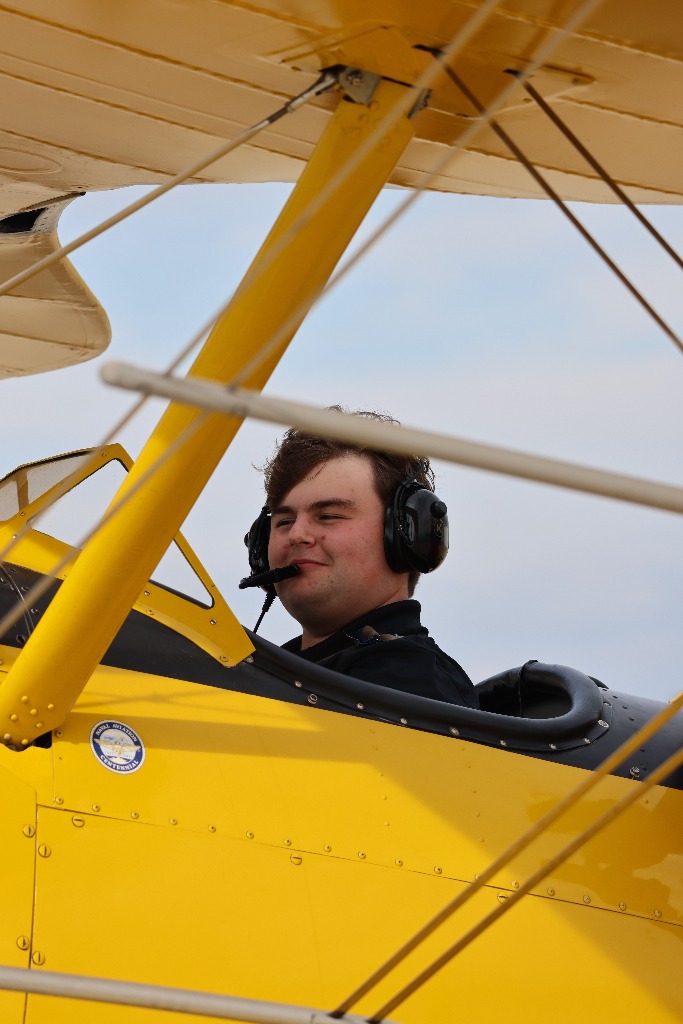
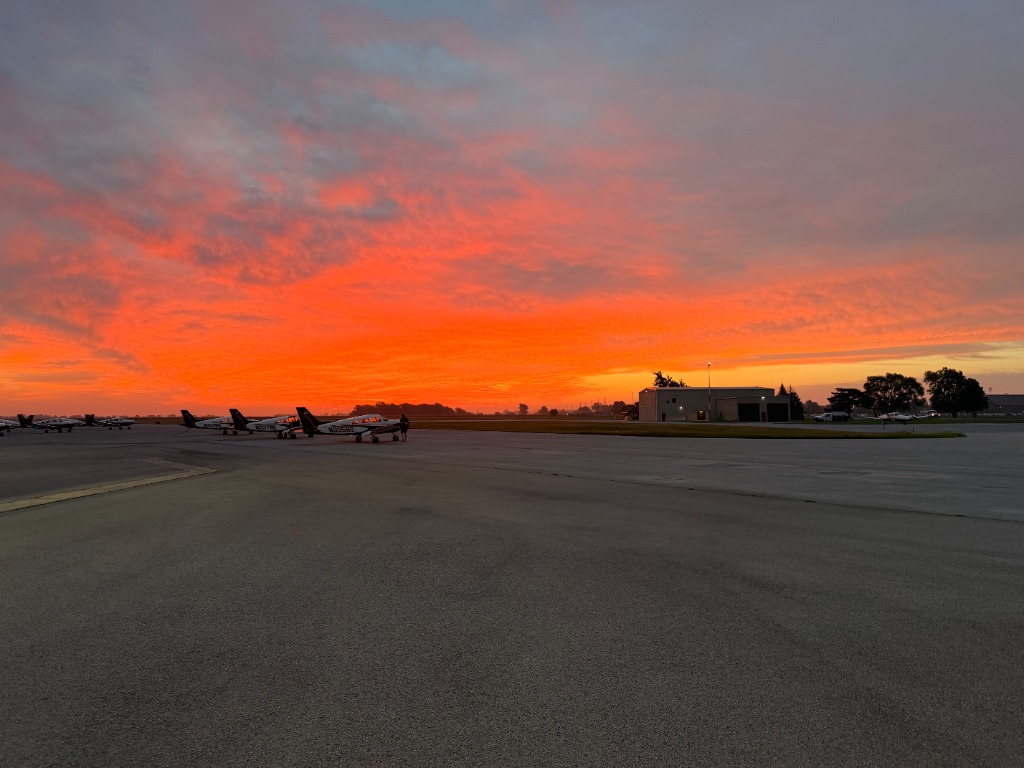
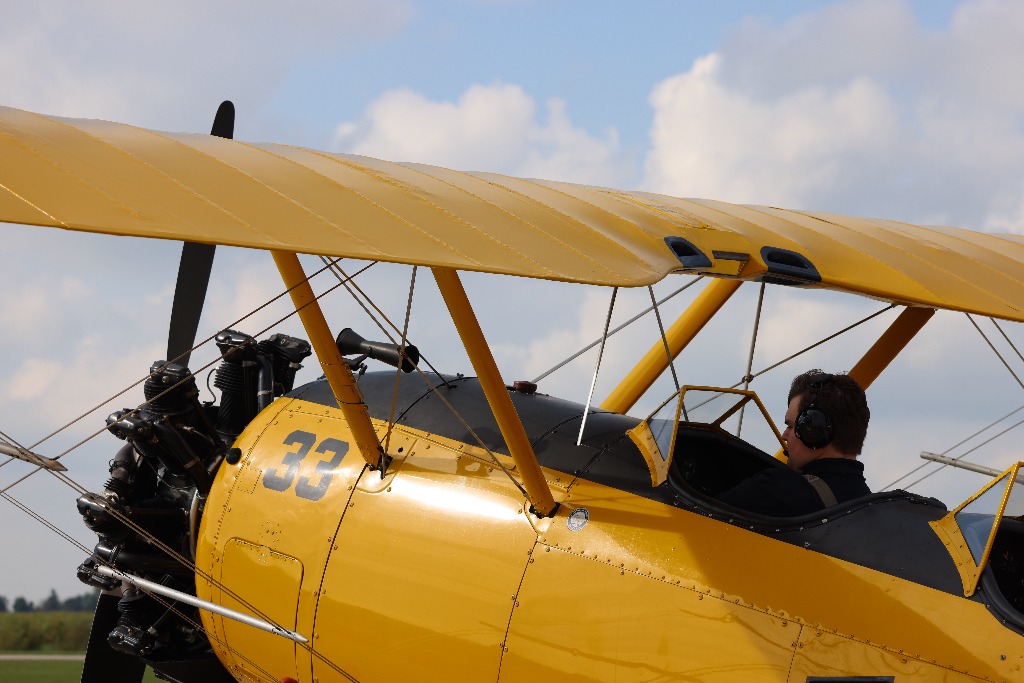
Flight Gallery
Moments from flight training, the flight line, and Wood County Airfield (1G0).


Flight Experience & Leadership
Flight training milestones, competitive flying on the BGSU Falcon Flight Team, and work experience.
Dual & Solo Logged (AERT 2220)
PIC Navigation & Pattern Practice
Part 141 Flight Training & Simulator
High Honor Roll (All Quarters)

BGSU Falcon Flight Team (NIFA SAFECON)
Flight Team Competitor & Student Pilot • National Intercollegiate Flying Association
Selected competitor for the BGSU Falcon Flight Team in regional NIFA SAFECON events, competing in SCAN (Simulated Comprehensive Aeronautical Navigation), aircraft pre-flight inspection, and Ground Trainer / SIM.
Valet Attendant & Vehicle Operations
Valet Attendant • Westwood Country Club
Safely maneuvered, staged, and parked luxury and standard vehicles in high-volume country club operations, maintaining strict safety protocols, acute spatial awareness, and professional guest hospitality.
Model United Nations International Delegate
Delegate & Committee Representative • St. Edward High School / THIMUN
Represented diplomatic delegations in committee debate, resolution drafting, and multinational consensus building at the international THIMUN conference in The Hague, Netherlands, as well as regional conferences across the Midwest.
Customer Service & Grocery Associate
Grocery Associate • Heinen's Grocery Store
Maintained premier visual merchandising standards, product availability, clean store presentation, and friendly customer assistance across consecutive years at a high-end regional grocer.
Trash Talkers Captain & Mellophone Section Leader
Percussion Captain & Mellophone Section Leader • St. Edward High School
Led high-energy percussion and brass performances across Northern Ohio. 3-Year Captain of Trash Talkers (custom percussion ensemble using industrial spray-painted barrels) and Mellophone Section Leader in the Marching Band and Jazz Ensemble.
Education
Bowling Green State University
B.S. in Aviation: Flight Technology & Operations
College of Technology, Architecture & Applied Engineering
- FAA Part 141 Professional Pilot Curriculum (Private, Instrument, Commercial, Multi-Engine)
- BGSU Falcon Flight Team active intercollegiate competitor (NIFA SAFECON)
- Advanced ground school training in aerodynamics, meteorology, systems, and FAR regulations
- Based out of Wood County Airport (K1G0) flight training facility
St. Edward High School
High School Diploma with High Honors
Holy Cross College Preparatory
- Cumulative GPA: 4.07 (High Honor Roll across all academic quarters 2022-2026)
- Advanced Placement (AP) English and International Baccalaureate (IB) Math, History, and Physics
- Trash Talkers Percussion Ensemble 3-Year Captain & Student Ambassador
- Horn Sergeant / Mellophone Section Leader in Marching Band & Jazz Ensemble
Community Service
Habitat for Humanity — West Virginia Housebuilding
Multi-Year Mission Trips
Volunteered over consecutive years in West Virginia constructing residential timber framing, roofing, insulation, and foundational work for underserved families.
Community Food Distribution & Hunger Relief
Greater Cleveland Area
Coordinated sorting, palletizing, and direct packaging of fresh agricultural produce and essential foodstuffs for regional food bank initiatives.
St. Edward High School Ambassador & Youth Instructor
Admissions & Youth Camps
Conducted prospective family tours, represented the school at leadership roundtables, and served as lead counselor for youth summer educational camps.
Flight Training & Capabilities
Flight procedures, maneuvers, and aeronautical skills developed through Part 141 training at BGSU.
Stage I: Pre-Solo Flight Maneuvers & Emergency Foundations
Completed (Oral & Sim Evaluation)
Ground 1, 2, 3, 6, 10, 12
Positive Exchange of Flight Controls & ADM
Three-way verbal and visual confirmation eliminating confusion over control of the aircraft, integrated with aeronautical decision making.
Aircraft Certificates, Documents & Maintenance Records
FAA Part 141 airworthiness compliance, ARROW inspection verification (AAV1ATE), and aircraft registration records.
Weight & Balance and Performance Computations
Precise calculation of center of gravity (CG) envelope, moment arms, fuel burn center shifts, and takeoff/landing distance charts.
Aviation Weather Assessment & Surface Analysis
Real-time decoding and operational interpretation of METAR, TAF, surface analysis charts, cloud ceilings, and hazardous trends.
Wind Shear & Wake Turbulence Avoidance
Recognition of low-level wind shear alerts, microburst hazards, heavy aircraft wingtip vortex behavior, and landing avoidance margins.
Airspace Classification & Navigation Systems
Regulatory operating rules and cloud clearance requirements across Class B, C, D, E, G, and Special Use Airspaces.
Engine Inoperative Procedures & Glide Performance
Emergency engine failure checklists, best glide configuration, forced landing selection, and restart attempts.
Emergency Equipment & Survival Gear Protocols
Operational deployment of ELT beacons, on-board fire suppression, cold-weather survival gear, and emergency signaling.
VOR Navigation & Radial Tracking Systems
Tuning, morse identification, radial intercept angles, CDI tracking, and station passage determination.
Airplane Maintenance Logs & Minimum Equipment List (MEL)
Aircraft airworthiness sign-offs, 14 CFR 91.213 inoperative equipment deferrals, MEL compliance, and placard procedures.
Normal & Crosswind Takeoffs
Smooth full-power application, rotation at Vr, crosswind aileron deflection into the wind, and coordinated climbout.
Stabilized Approaches & Full-Stop Landings
Stabilized 3° descent profile, constant airspeed on short final, smooth roundout, flare, and centerline rollout braking.
Traffic Pattern Operations & Radio Advisory
Entry angles, downwind spacing, base leg descent management, crosswind adjustments, and clear CTAF position reporting.
Steep Turns (<45° & 45° Bank Precision)
360° constant-altitude turns at up to 45° bank angle, back-pressure and trim compensation, rollout within ±10° heading.
Maneuvering During Slow Flight
Maintaining flight at minimum controllable airspeed with stall horn active, rudder coordination, and immediate stall recovery readiness.
Power-On Stalls (Departure Profiles)
Full-power climb stalls simulating takeoff departures, directional control with rudder, prompt pitch reduction at buffet.
Power-Off Stalls (Approach Profiles)
Landing configuration stalls with full flaps, recognition of impending buffet, prompt recovery with minimal altitude loss.
Turning Stalls & Accelerated Stall Awareness
Impending stall recovery while established in 20° bank turns, preventing wing drop or incipient spin tendencies.
Forward Slip to Landing (High Sink Rate)
Opposite aileron and rudder cross-control to dramatically increase descent rate without accelerating airspeed.
Go-Around from Rejected Landing
Immediate decision-making, application of full throttle, pitch for Vy, carb heat cold, and staged flap retraction.
Ground Reference Maneuvers (Rectangular, S-Turns, Turns Around a Point)
Dynamic bank angle variation (steep to shallow) compensating for wind drift to maintain a symmetrical ground track.
Basic Attitude Instrument Flying (SU 7)
Straight & level, constant airspeed climbs and descents, and standard rate turns to headings solely by instrument cross-check.
Critical Attitude & Unusual Pitch/Bank Recovery
Rapid recovery from nose-high impending stalls and nose-low high airspeed spiral dive attitudes under simulated IMC.
Full Emergency Simulator Training (SU 8 EP SIM Engine Failure)
Simulator scenarios for sudden engine power loss during takeoff roll, initial climbout, and enroute cruising altitude.
Power-Off Forced Landing Glide Management
Immediate trim for best glide (Vg), emergency checklists, landing zone selection, and high/low key pattern management.
Engine Fire & Electrical Fire Containment
Immediate mixture idle cutoff, fuel selector off, emergency descent profile, electrical master isolation, cabin ventilation.
Loss of Engine Oil Pressure & Fuel Starvation Recovery
Precautionary landing execution, auxiliary fuel pump activation, fuel selector switching, and throttle management.
Incipient Spin Recognition & Recovery (PARE)
Uncoordinated stall spin entry recognition and instant PARE protocol execution (Power idle, Ailerons neutral, Rudder opposite, Elevator forward).
Carburetor Icing Detection & Heat Application
Detecting insidious RPM drops in humid conditions, immediate full carb heat application, managing initial engine roughness.
Landing Without Elevator Control (Trim & Power)
Managing pitch attitude solely through elevator trim wheel and throttle adjustments down to runway touchdown.
Vacuum System & Pitot-Static Failure Partial Panel
Diagnosing gyro failure, executing straight-and-level and timed turns using turn coordinator, magnetic compass, and altimeter.
Positive Exchange of Flight Controls & ADM
Three-way verbal and visual confirmation eliminating confusion over control of the aircraft, integrated with aeronautical decision making.
Aircraft Certificates, Documents & Maintenance Records
FAA Part 141 airworthiness compliance, ARROW inspection verification (AAV1ATE), and aircraft registration records.
Weight & Balance and Performance Computations
Precise calculation of center of gravity (CG) envelope, moment arms, fuel burn center shifts, and takeoff/landing distance charts.
Aviation Weather Assessment & Surface Analysis
Real-time decoding and operational interpretation of METAR, TAF, surface analysis charts, cloud ceilings, and hazardous trends.
Wind Shear & Wake Turbulence Avoidance
Recognition of low-level wind shear alerts, microburst hazards, heavy aircraft wingtip vortex behavior, and landing avoidance margins.
Airspace Classification & Navigation Systems
Regulatory operating rules and cloud clearance requirements across Class B, C, D, E, G, and Special Use Airspaces.
Engine Inoperative Procedures & Glide Performance
Emergency engine failure checklists, best glide configuration, forced landing selection, and restart attempts.
Emergency Equipment & Survival Gear Protocols
Operational deployment of ELT beacons, on-board fire suppression, cold-weather survival gear, and emergency signaling.
VOR Navigation & Radial Tracking Systems
Tuning, morse identification, radial intercept angles, CDI tracking, and station passage determination.
Airplane Maintenance Logs & Minimum Equipment List (MEL)
Aircraft airworthiness sign-offs, 14 CFR 91.213 inoperative equipment deferrals, MEL compliance, and placard procedures.
Normal & Crosswind Takeoffs
Smooth full-power application, rotation at Vr, crosswind aileron deflection into the wind, and coordinated climbout.
Stabilized Approaches & Full-Stop Landings
Stabilized 3° descent profile, constant airspeed on short final, smooth roundout, flare, and centerline rollout braking.
Traffic Pattern Operations & Radio Advisory
Entry angles, downwind spacing, base leg descent management, crosswind adjustments, and clear CTAF position reporting.
Steep Turns (<45° & 45° Bank Precision)
360° constant-altitude turns at up to 45° bank angle, back-pressure and trim compensation, rollout within ±10° heading.
Maneuvering During Slow Flight
Maintaining flight at minimum controllable airspeed with stall horn active, rudder coordination, and immediate stall recovery readiness.
Power-On Stalls (Departure Profiles)
Full-power climb stalls simulating takeoff departures, directional control with rudder, prompt pitch reduction at buffet.
Power-Off Stalls (Approach Profiles)
Landing configuration stalls with full flaps, recognition of impending buffet, prompt recovery with minimal altitude loss.
Turning Stalls & Accelerated Stall Awareness
Impending stall recovery while established in 20° bank turns, preventing wing drop or incipient spin tendencies.
Forward Slip to Landing (High Sink Rate)
Opposite aileron and rudder cross-control to dramatically increase descent rate without accelerating airspeed.
Go-Around from Rejected Landing
Immediate decision-making, application of full throttle, pitch for Vy, carb heat cold, and staged flap retraction.
Ground Reference Maneuvers (Rectangular, S-Turns, Turns Around a Point)
Dynamic bank angle variation (steep to shallow) compensating for wind drift to maintain a symmetrical ground track.
Basic Attitude Instrument Flying (SU 7)
Straight & level, constant airspeed climbs and descents, and standard rate turns to headings solely by instrument cross-check.
Critical Attitude & Unusual Pitch/Bank Recovery
Rapid recovery from nose-high impending stalls and nose-low high airspeed spiral dive attitudes under simulated IMC.
Full Emergency Simulator Training (SU 8 EP SIM Engine Failure)
Simulator scenarios for sudden engine power loss during takeoff roll, initial climbout, and enroute cruising altitude.
Power-Off Forced Landing Glide Management
Immediate trim for best glide (Vg), emergency checklists, landing zone selection, and high/low key pattern management.
Engine Fire & Electrical Fire Containment
Immediate mixture idle cutoff, fuel selector off, emergency descent profile, electrical master isolation, cabin ventilation.
Loss of Engine Oil Pressure & Fuel Starvation Recovery
Precautionary landing execution, auxiliary fuel pump activation, fuel selector switching, and throttle management.
Incipient Spin Recognition & Recovery (PARE)
Uncoordinated stall spin entry recognition and instant PARE protocol execution (Power idle, Ailerons neutral, Rudder opposite, Elevator forward).
Carburetor Icing Detection & Heat Application
Detecting insidious RPM drops in humid conditions, immediate full carb heat application, managing initial engine roughness.
Landing Without Elevator Control (Trim & Power)
Managing pitch attitude solely through elevator trim wheel and throttle adjustments down to runway touchdown.
Vacuum System & Pitot-Static Failure Partial Panel
Diagnosing gyro failure, executing straight-and-level and timed turns using turn coordinator, magnetic compass, and altimeter.
Direct Inquiries
Open to flight opportunities, collegiate aviation discussions, and professional inquiries.